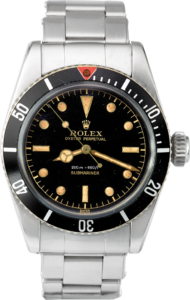
The Rolex Submariner Reference 5513: the purist’s dive watch, the longest-running Submariner in Rolex’s history, and the watch George Lazenby wore to his Bond audition before he was cast, and kept on his wrist when the role was his.
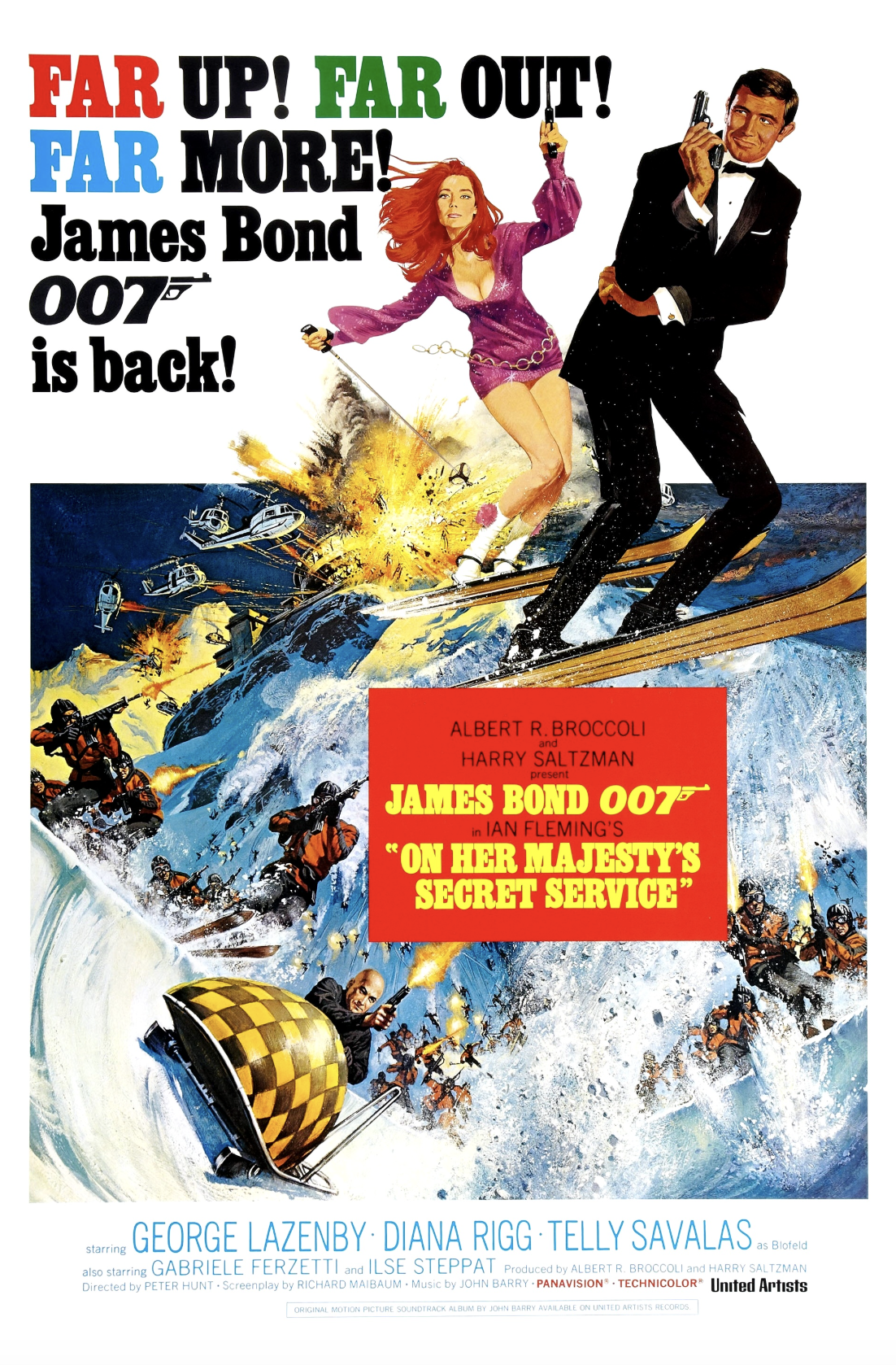
Peter R. Hunt’s On Her Majesty’s Secret Service (1969) is the most unusual entry in the Bond canon: the one in which 007 falls genuinely in love, marries, and within minutes of the ceremony loses his wife to a passing car and a hail of bullets. George Lazenby, an Australian former model who had never appeared in a feature film, plays Bond for the only time in his career, and does so with a physicality and emotional directness that the role had not previously shown. He is, in the assessment of many, the best Bond nobody fully appreciated while he had the job.
Lazenby wore a Rolex to his audition. He visited Sean Connery’s barber and tailor beforehand, reasoning that inhabiting Bond’s style from the outside in might help his case, and he bought himself a Submariner as part of the preparation. Whether the watch on his wrist in On Her Majesty’s Secret Service was that personal purchase or a production allocation has been a matter of collector debate for decades. What is confirmed is that Lazenby personally owned a Rolex Submariner 5513, and that the watch appearing on his wrist throughout the film is consistent with that reference. Bond Lifestyle notes that some sources attribute the casino scene specifically to Lazenby’s own watch. The detail carries weight: if true, it means the most intimate and emotionally exposed Bond film in the franchise’s history was made partly by an actor who was so committed to the role that he brought his own Rolex.
Lazenby wore two Rolex references in the film overall. The 5513 Submariner, on an Oyster bracelet, appears in the casino scenes and in the assault on Blofeld’s mountain laboratory at Piz Gloria. A Rolex pre-Daytona chronograph, reference 6238, purchased by EON Productions from Bucherer in Interlaken in October 1968 and later sold at Christie’s for £23,400, appears in the scenes at Piz Gloria where Bond is undercover as genealogist Sir Hilary Bray. That watch is the more documented and the more celebrated of the two. The 5513 is the one he wore to his own wedding.
More on the film: imdb.com/title/tt0064757 and on the franchise’s watch lineage: jamesbondlifestyle.com/product/rolex-chronograph-6238
Ian Fleming’s Watch and the Character He Shaped
James Bond’s relationship with Rolex did not begin in the cinema. Ian Fleming, the former Royal Naval Intelligence officer who created 007 in 1952, was himself a Rolex man, wearing a reference 1016 Explorer while writing On Her Majesty’s Secret Service in 1962, the same year the 5513 entered production. In his fiction, Fleming described Bond’s wristwatch precisely: “a heavy Rolex Oyster Perpetual on an expanding metal bracelet. Used properly, these could be turned into most effective knuckle busters.” When the art director of Dr. No asked Fleming to specify Bond’s wardrobe, the author replied: “007 wears two-button single-breasted suits in dark blue tropical worsted. No handkerchief in breast pocket. Wears Rolex Oyster Perpetual watch.” The relationship was personal before it was commercial.
Sean Connery had worn the Submariner 6538 through Dr. No, From Russia With Love, Goldfinger, and Thunderball. When Lazenby inherited the role and the Rolex, he inherited the 5513, the 6538’s successor and the watch that would define the character’s wrist through Roger Moore’s first two outings as well.
The Reference 5513: The Purist’s Submariner
The Rolex Submariner reference 5513 was introduced in 1962 as a companion to the 5512, which had been Rolex’s no-date Submariner since 1959. The distinction between the two is technical and aesthetic simultaneously. The 5512 was a certified chronometer, and its dial carried four lines of text to accommodate the “Superlative Chronometer Officially Certified” designation below the depth rating. The 5513 used a non-COSC-certified movement, carrying only two lines of dial text: Submariner and the water resistance specification. The result is a dial of striking visual economy, clean and symmetrical in a way that the four-liner cannot achieve.
Collectors have consistently preferred this visual balance to the certification credential. The 5513 is what they call the purist’s Submariner, a watch whose entire surface is devoted to legibility and identification without the supplementary text of institutional validation. In a dive environment, the chronometer certification makes no practical difference. What matters is that the watch starts, times correctly, and reads clearly in low visibility at depth. The 5513 does all of this without the bureaucratic text, and looks better for the absence.
The case is 40mm stainless steel, fitted with crown guards introduced in its immediate predecessor and retained throughout the 5513’s production. Crown guards, the flanges protecting the winding crown from impact, were a direct response to the damage that field use inflicted on unprotected crowns. Their addition to the Submariner line with the 5512 marked the transition from the earlier 6538’s open crown to a more robust case architecture. The 5513 carries these guards through its entire twenty-seven-year production run, one of the longest for any single Rolex sport reference.
The movements used across that run were the calibre 1530 in earliest production and the calibre 1520 from 1963 onward. Neither was COSC-certified, and this deliberate choice, keeping the movement specification one level below the 5512’s certified calibre, maintained the 5513’s position as the accessible professional dive watch against the 5512’s premium offering. Both calibres beat at 19,800 vibrations per hour with a 42-hour power reserve, and both are self-winding with hacking seconds.
The Dial Through Twenty-Seven Years
The 5513’s production from 1962 to approximately 1989 means that surviving examples span the entire transformation of Rolex’s dial vocabulary across three decades. The earliest examples carry gilt dials, the warm gold-toned print on a glossy black background that characterises Rolex sport watches from the early 1960s. Radium luminescence in the hour plots gave these dials the particular quality of warm yellow glow that photographs poorly and reads beautifully in person. By 1966 the gilt dial had given way to matte black with white printing, a cooler and more legible surface that Rolex maintained until the late 1970s. The transition from radium to tritium luminescence, mandated by safety concerns, occurred in the mid-1960s, with underline designations on the dial indicating the change.
The Explorer dial variant, produced from approximately 1963 to 1964, placed Arabic numerals at three, six, and nine o’clock in place of the standard applied markers, giving the Submariner a dial format borrowed from the Explorer reference. These examples are among the most sought-after 5513 variations in the current collector market. COMEX, the French commercial diving company, also ordered modified 5513 examples with helium escape valves, used by their professional saturation divers and representing the overlap between the Submariner’s recreational positioning and the Sea-Dweller’s professional brief.
The Longest-Running Submariner and What It Means
The 5513’s twenty-seven-year production run is the longest of any Submariner reference. This longevity means that the watch became, for the period from its introduction through the early 1980s, simply the Submariner, the model against which diving watches were measured and the one whose proportions, bezel design, and dial grammar became the category’s visual language. The Seiko 6105-8110 that American soldiers wore in Vietnam was measuring itself against the Submariner. The Alsta Nautoscaph was distinguishing itself from the Submariner. The Blancpain Fifty Fathoms had helped inspire the category the Submariner now defined. All these watches were in conversation with the black-dialled, forty-millimetre, no-date Rolex that came in and out of film production between 1962 and 1989.
When Roger Moore’s Bond received a 5513 equipped with a buzzing circular-saw bezel and a magnetic deflector in Live and Let Die (1973), the gadget worked because the watch was already known: Q’s modifications were absurd additions to an object whose seriousness was unquestioned. When Lazenby wore his personal 5513 to his cinematic wedding, the watch worked because it was simply what Bond wore, no explanation required. Twenty-seven years of production had made it so. Roger Moore worn a Rolex 5513 also in The Man With The Golden Gun.
More on the 5513’s history: teddybaldassarre.com/blogs/watches/rolex-5513-submariner-review and on Bond’s Rolex lineage: watchtime.com/featured/watches-james-bond
Technical note: Rolex Submariner Reference 5513, introduced 1962, discontinued approximately 1989. Stainless steel case, 40mm diameter, with crown guards. No date complication. Two-line dial: “Submariner” and water resistance specification only. Movements: Rolex calibre 1530 (earliest production), then calibre 1520 from circa 1963 onward; both self-winding automatic, 19,800 bph, 42-hour power reserve, non-COSC-certified. Rotating bidirectional bezel with black aluminium insert, graduated 60-minute scale. Water resistance 200 metres, 660 feet. Acrylic crystal. Dial variants across production: gilt (1962 to circa 1966), Explorer dial with Arabic numerals (1963 to 1964), matte white-print (from circa 1966), glossy (from late 1970s). Bracelet variants: riveted Oyster (early), folded link, then solid link (from 1980s). Military and COMEX variants produced. Replaced in the no-date Submariner line by reference 14060.
Details
Brand:
Marketplace Price
€13 000
Movie Year:
1969
As seen on:
Movie/TV Series: