
Released on July 26, 2019, and directed by Quentin Tarantino for Sony Pictures, Once Upon a Time in Hollywood is an American comedy-drama film starring Leonardo DiCaprio, Brad Pitt, and Margot Robbie. Set in Los Angeles in 1969, it follows two fictional characters — Rick Dalton, a fading television actor navigating the transition from leading man to guest villain in the episodic westerns that had defined his career, and Cliff Booth, his stunt double, driver, and closest friend — against the historical backdrop of Sharon Tate’s final months and the gathering presence of the Manson Family in the hills above Cielo Drive. Tarantino’s ninth film is among his most personally felt and formally assured: a long, digressive, sun-saturated elegy for a specific moment in Los Angeles cultural history in which the old Hollywood of studio contracts and television westerns was being displaced by the New Hollywood of Cassavetes, Hopper, and the European-influenced cinema that would produce Easy Rider and Midnight Cowboy within the same calendar year the film depicts. Its relationship to historical event is one of sustained, knowing deferral — Sharon Tate, played by Margot Robbie in a performance of unaffected luminosity, moves through the film in a bubble of oblivious happiness whose dramatic irony the audience carries throughout without the film ever pressing on it — until the final act’s revisionist intervention, which redirects the Manson Family’s violence away from its historical target and toward an outcome whose cathartic energy Tarantino stages with the gleeful, consequence-free abandon of the grindhouse cinema he has spent his career honoring. The film won two Academy Awards, including Best Supporting Actor for Brad Pitt, and grossed over 374 million dollars worldwide against a production budget of approximately 96 million.
Behind the Scenes. Leonardo Di Caprio’s performance as Rick Dalton is among the most technically demanding of his career, requiring him to play an actor of limited range playing characters of varying quality across a series of nested fictional productions — a western television episode, a spaghetti western shot in Rome — while simultaneously conveying the authentic personal terror of a man watching his professional relevance drain away in an industry whose appetite for reinvention he cannot keep pace with. The scene in which Dalton breaks down in tears in his trailer following a sequence of failed takes, then gathers himself sufficiently to deliver the best work of his fictional day, was substantially developed in collaboration between DiCaprio and Tarantino during production and is widely regarded as the emotional center of the film. Brad Pitt’s Cliff Booth — laconic, competent, uncomplaining, and shadowed by an unresolved suggestion of violence in his past — operates in a register of easy physical authority that the actor inhabits with a naturalism that closer examination reveals as a performance of considerable precision. Tarantino constructed Booth as a specific American archetype: a Second World War veteran who served in both the European and Pacific theaters, decorated for valor, who returned from combat to find that the only civilian life available to him was one conducted at the margins of the film industry as someone else’s physical surrogate. The recreation of 1969 Los Angeles, overseen by production designer Barbara Ling and achieved through a combination of period location work, set construction, and digital restoration of the city’s vintage signage and infrastructure, is among the most comprehensive period reconstructions in recent American cinema. Tarantino’s deployment of period popular music — sourced from the specific radio formats and recording sessions of 1969 with a documentary specificity — gives the film a sonic authenticity that reinforces its visual period construction at every moment.
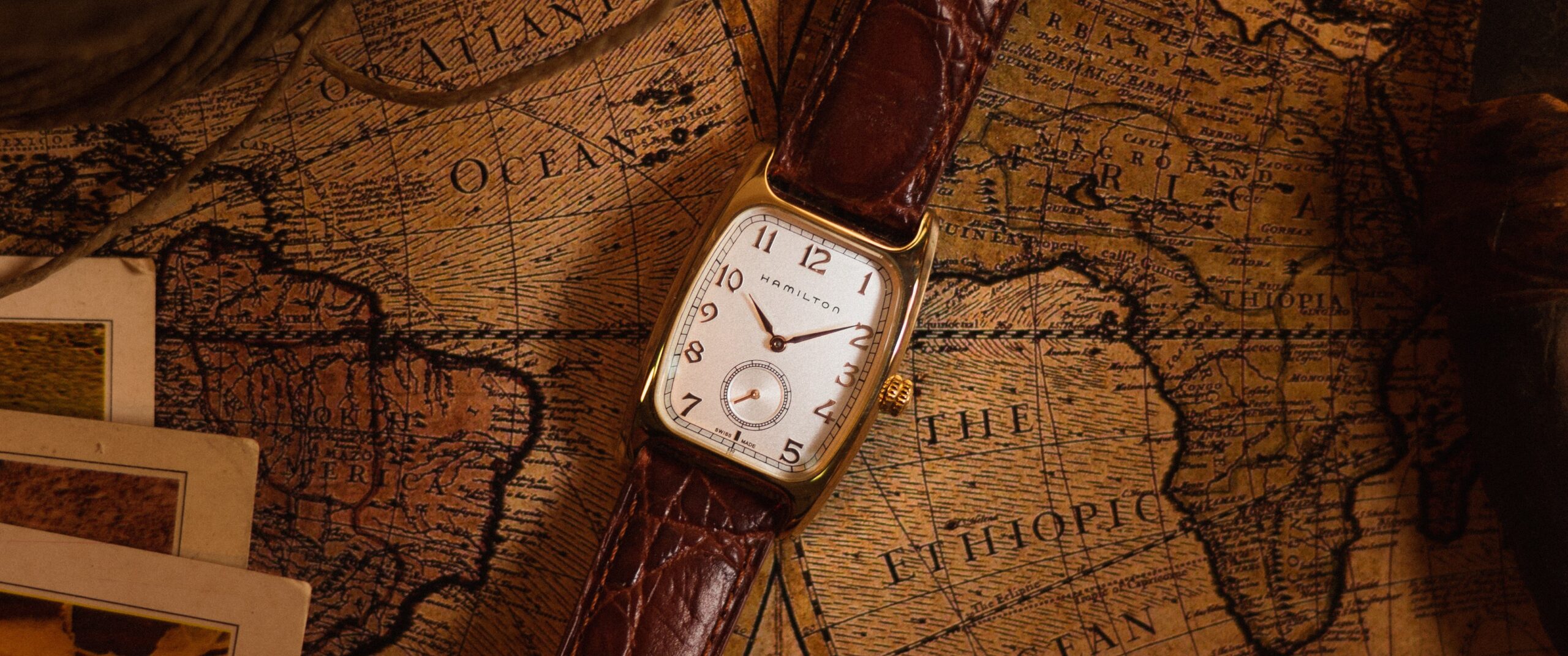
The Watch. The watch worn by Brad Pitt as Cliff Booth throughout Once Upon a Time in Hollywood is a Citizen reference 67-9020, known among collectors as the Challenge Timer — a Japanese automatic flyback chronograph launched by Citizen in 1972 as a direct challenge to Seiko’s legendary 6139 automatic chronograph. The Bullhead designation, applied by collectors rather than the manufacturer, derives from the watch’s most immediately striking feature: the placement of the chronograph pushers and crown at the twelve o’clock position rather than the conventional three, producing a case silhouette in which the functional controls project upward from the top of the case with an aggressive, confrontational profile entirely unlike any Swiss chronograph of the period. The 67-9020 houses Citizen’s caliber 8110A, a 23-jewel automatic movement of considerable technical sophistication for its price point, featuring a vertical-clutch column wheel construction and a flyback complication — allowing the wearer to zero the chronograph whilst running rather than having to stop it first and then restart — a feature absent from the rival Seiko 6139. The case measures 38.5mm without crown and 44mm with crown, the additional height imposed by the upward-projecting pusher configuration giving the watch a presence on the wrist that its case diameter alone does not convey. The dial of the specific example worn by Pitt presents a panda configuration — light background with contrasting dark subdials — with day and date displayed at six o’clock, the overall layout combining functional legibility with a visual energy consistent with the sports chronograph design vocabulary of early 1970s Japanese watchmaking at its most confident. On screen, the watch is worn on a leather bund strap — a wide, padded military-heritage strap construction that encases the wrist in leather and positions the watch centrally — a combination that the film’s costume department selected with evident period research, the bund strap being a documented choice of pilots, racing drivers, and military personnel of the era for whom wrist protection and watch security under physical stress were practical considerations. The choice of the Citizen 67-9020 for Cliff Booth is one of the most considered watch decisions in recent cinema, communicating with precision what a conventional prestige piece could not: Booth is a man of genuine competence and complete indifference to status, whose equipment is chosen for how it functions rather than what it announces, and who would no more wear a Rolex than he would drive a car he couldn’t fix himself. The watch’s period accuracy is exact — the 67-9020 was in production during the film’s 1969 setting — and its identification by the watch community in the days following release generated a wave of collector interest that drove secondary market prices for well-preserved examples to multiples of their pre-film values, the Tarantino effect on vintage watch desirability proving here, as with the Lancet trench watch in Pulp Fiction a quarter century earlier, as swift and comprehensive as any formal marketing campaign could have achieved.
Details
Brand:
Marketplace Price
€800
Movie Year:
2019
As seen on:
Movie/TV Series: