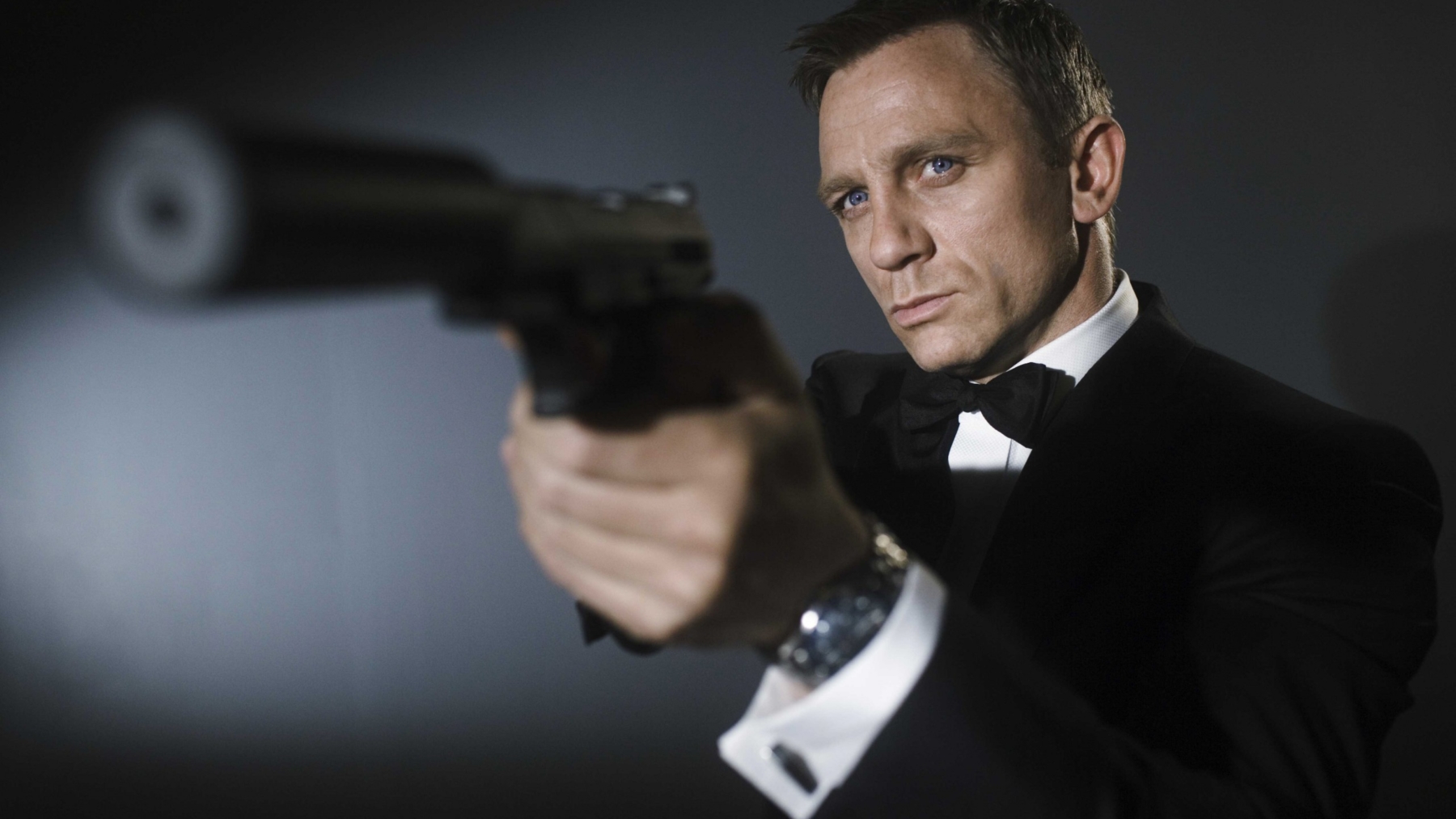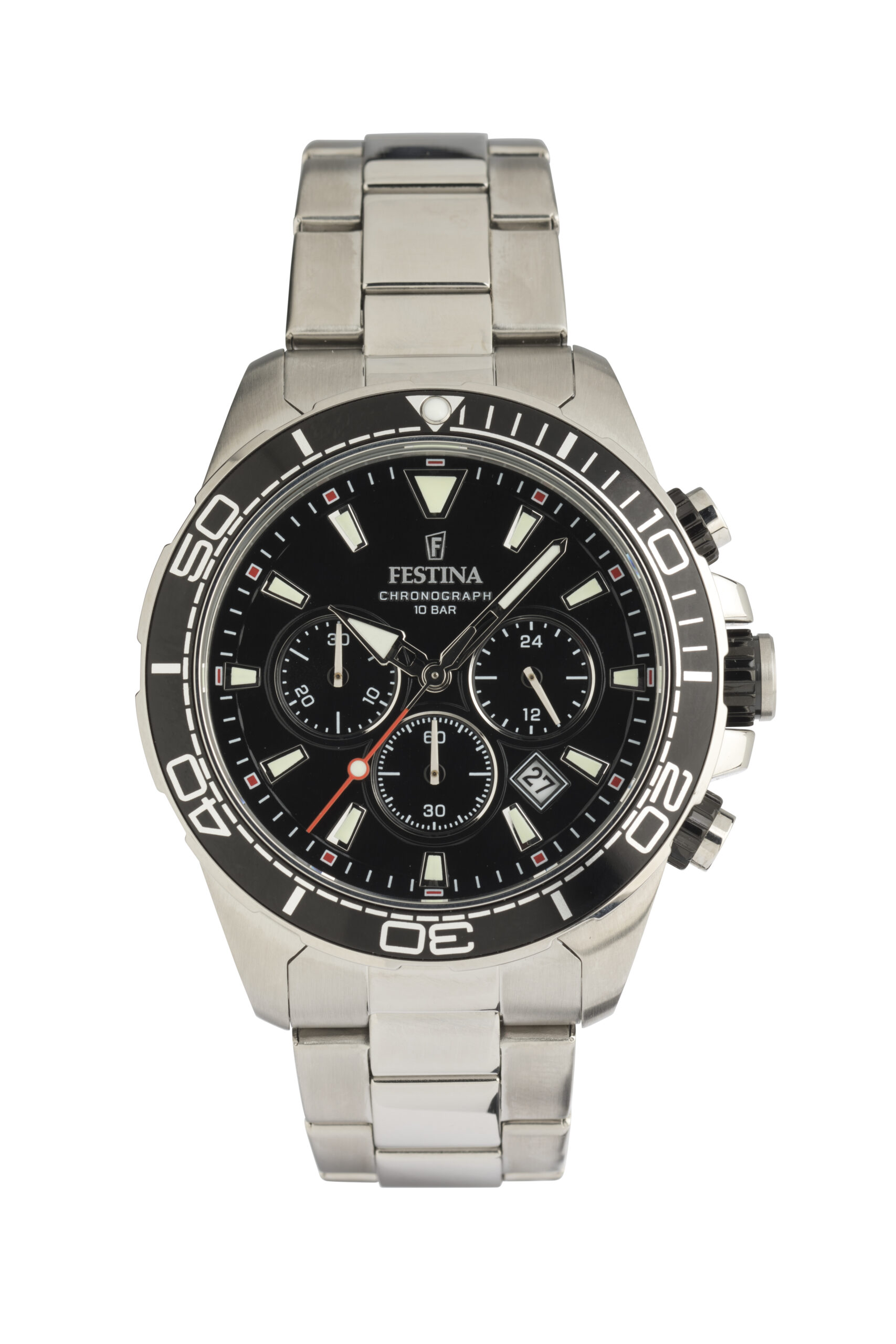
The Festina Sport F20361/4: the 44.3mm quartz chronograph from a brand founded in La Chaux-de-Fonds in 1902 and now headquartered in Barcelona, worn by Gerard Butler as structural engineer John Garrity throughout Ric Roman Waugh’s Greenland (2020), where the watch functions as the film’s countdown instrument and appears on the poster, the promotional materials, and in repeated close-up as a comet approaches Earth
Ric Roman Waugh’s Greenland (2020) is a disaster film with a different centre of gravity than the genre usually finds. Where most comet-strikes-Earth narratives position humanity at scale, cutting between scientists, presidents, and masses in flight, Greenland stays close to one family: John Garrity, a structural engineer played by Gerard Butler, his wife Allison, and their son Nathan, who must reach a military airlift in time to secure passage to a shelter facility in Greenland before the comet Clarke makes impact. The film’s tension comes not from the collision itself but from the social fabric unravelling around a family trying to do what the government has told them to do while everyone else’s government-issued invitation has not arrived.
The Festina Sport F20361/4 is on Butler’s wrist from early in the film and remains there throughout. It appears in multiple close-up shots, in promotional imagery, and on the theatrical poster. The watch is not a background detail: it functions as the film’s countdown instrument, the physical object on Garrity’s wrist that measures the shrinking distance between the family and either survival or death. A chronograph worn by a structural engineer managing against a deadline is a natural piece of character shorthand; a chronograph worn by anyone in a film about a comet with a known impact time is something closer to a narrative device.
The F20361/4 earns this prominence through a specific commercial arrangement. Gerard Butler is a brand ambassador for Festina, and, as WatchPro confirmed, the brand struck a deal with the film’s producers to incorporate one of its chronographs into the action. Butler also co-produced the film, which placed him on both sides of the arrangement. The result is one of the more thoroughly integrated watch placements in recent disaster cinema: the watch is not incidental, it is written into the film’s visual logic.
A prop auction listing from Yallywood Props adds a production detail not visible on screen: the first example of the F20361/4 worn by Butler broke during filming, and the watch that appears in the film’s later scenes is the second example supplied for the production.
The Watch: A Chronograph Built for the Third Act
The Festina Sport F20361/4 is a 44.3mm stainless steel chronograph with a black dial carrying three subdials in the standard tricompax arrangement, a red seconds hand, and a black bezel with diver-style elapsed-time markings. The date window sits between four and five o’clock. The case is 316L stainless steel, the crystal is mineral glass, the bracelet is steel with a lug width of 21.9mm, and the movement is quartz with chronograph complication. Water resistance is 100 metres, 330 feet.
The F20361/4 belongs to the Festina Prestige collection and is available across a range of colour combinations spanning steel, gold tone, blue, black, and green dial and bezel variants. The black-dial, black-bezel configuration worn in Greenland is the most visually severe of these options, reading on screen as a professional instrument rather than a sport fashion piece. At a retail price that positioned it, at the time of the film’s release, around £124 on Amazon UK and $132 on eBay, the F20361/4 is one of the more accessible watches to have received significant screen time in a major studio production. Watch-ID.com, which tracks watches in film, noted at the time of Greenland‘s release that it was the first Festina they had documented on screen.
Festina Lente: La Chaux-de-Fonds to Barcelona
The Festina brand name comes directly from the Latin phrase festina lente, “hasten slowly”, an aphorism attributed by Suetonius to the Emperor Augustus, who was known for combining urgency with deliberation. The phrase appeared on Festina dials from the brand’s earliest years, and in a film about a family racing against a comet’s impact window, it carries a retrospective irony that the filmmakers may or may not have registered: the watch counting down to disaster is named after the instruction to proceed without haste.
The Stüdi family founded Festina in 1902 in La Chaux-de-Fonds, the Swiss city that produced more significant watch brands per square metre of historical geography than anywhere else on Earth. La Chaux-de-Fonds is the city of Breguet, Girard-Perregaux, Zenith, TAG Heuer’s technical roots, and a dozen other names that constituted the core of Swiss horology through the nineteenth and twentieth centuries. Festina’s origins there placed it within the tradition of Swiss precision assembly, though the brand was always a commercial rather than a luxury proposition.
In 1935, the founding family sold the brand to businessman Willy Burkhard von Wilhelm. During the Second World War, the company relocated to Barcelona, Spain, under difficult circumstances that placed the brand’s administrative centre outside Switzerland while its watchmaking connections remained to the Swiss industry. In 1975, Georges Uhlmann acquired the company and expanded its international presence. The transformation that made Festina what it is today came in 1984, when the Spanish businessman Miguel Rodríguez, who had entered the watch industry by selling Swiss watches in Spain and had already created the Lotus watch brand, acquired Festina and formed the Festina-Lotus group. Rodríguez moved aggressively into the sports watch segment with the Chrono Bike collection in 1984, designed specifically for cyclists, and in 1990 established a Festina professional cycling team. In 1992, the brand became official timekeeper of the Tour de France, a relationship that lasted until 2016 and established the brand’s identity as the sports chronograph of European competitive cycling.
The Festina Group’s current portfolio extends beyond its founding brand to include Jaguar, Candino, Calypso, Lotus, and the luxury brands Perrelet, founded in 1777 by Abraham-Louis Perrelet, one of the pioneers of the self-winding mechanism, and L. Leroy, one of the oldest names in French precision horology. The Group also owns Soprod SA, a Swiss movement manufacturer whose PO24 and PO92 calibres are used across the Group’s watch range, providing vertical integration from component production to retail that is unusual for a brand operating in the accessible price segment.
Since 2016, when the Tour de France sponsorship ended, Festina’s primary celebrity association has been Gerard Butler, who became the brand’s global ambassador. Greenland represents the fullest expression of that relationship in motion: the ambassador is also the co-producer, the watch is designed into the film’s narrative function, and the chronograph on Garrity’s wrist counts down alongside the film’s own clock.
Technical note: Festina Sport F20361/4, Prestige collection. Stainless steel case, 316L, 44.3mm diameter. Black dial with three subdials and red seconds hand. Black bezel with diver elapsed-time markings. Date window between 4 and 5 o’clock. Mineral crystal. Quartz movement with chronograph complication. 316L stainless steel bracelet, 21.9mm lug width. Water resistance 100 metres, 330 feet. Available in multiple colour variants. Worn by Gerard Butler as John Garrity in Greenland (2020), directed by Ric Roman Waugh. Butler is a brand ambassador for Festina; a commercial placement agreement between Festina and the film’s producers resulted in the watch appearing in close-up, in promotional materials, and on the theatrical poster. Production note: the first example of the watch broke during filming; the second example was worn for the remainder of production.
Details
Brand:
Marketplace Price
€170
Movie Year:
2020
As seen on:
Movie/TV Series: