“Whatever you imagined, whatever you wanted to be in it, when you opened that box, there it would be.”
Lost is an American drama series that aired on ABC from September 22, 2004 to May 23, 2010, across six seasons and 121 episodes, created by J.J. Abrams, Damon Lindelof, and Jeffrey Lieber and produced by Bad Robot Productions in association with Touchstone Television. The series follows the survivors of Oceanic Flight 815, a commercial aircraft that crashes on a mysterious island in the South Pacific, and interweaves their attempts to survive with an escalating revelation of the island’s supernatural properties, its hidden population of prior inhabitants known as the Others, and the personal histories of the survivors themselves through an ambitious structure of parallel flashbacks, flash-forwards, and eventually flash-sideways that constituted one of the more formally ambitious narrative architectures in American network television history. At its peak in the mid-2000s, Lost drew over 23 million viewers per episode and generated a cultural engagement of sustained intensity whose online fan community, dedicated to decoding the series’ mythology and cross-referencing its literary and philosophical references, represented an early and defining example of what would come to be called participatory television culture. The series won the Emmy Award for Outstanding Drama Series in 2005, the first pilot in network history to win the award, and its critical reputation, though complicated by the divided response to its finale, remains that of a production that permanently expanded the ambition of what network drama could attempt.
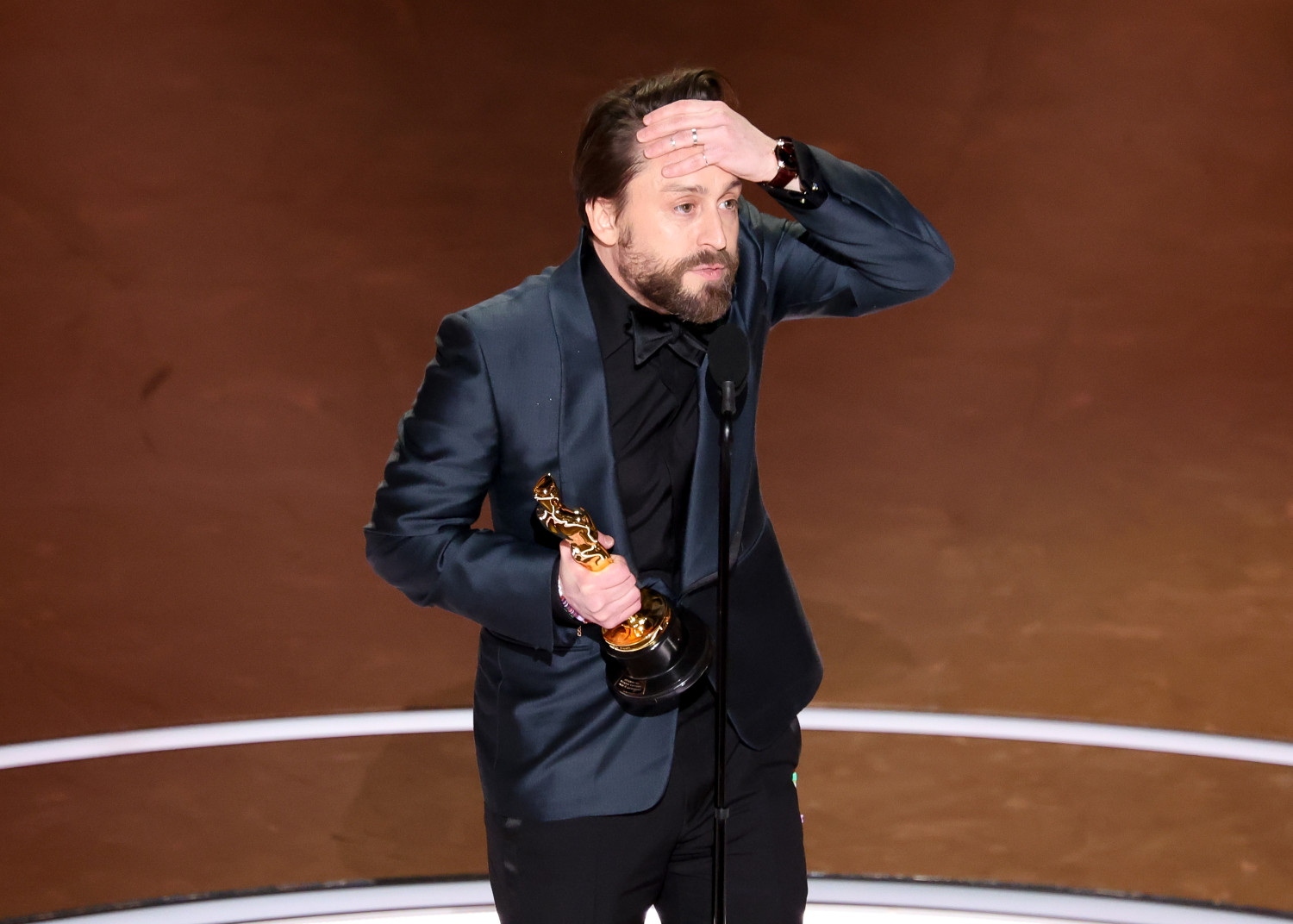
Behind the Scenes. The series was filmed almost entirely on location in Hawaii, primarily on Oahu, whose varied landscape of jungle, beach, and volcanic terrain provided the physical vocabulary for the island’s geography. The ensemble cast of unusual size and cultural diversity was assembled through a casting process that prioritized character specificity over star power, producing a company that included Matthew Fox, Evangeline Lilly, Terry O’Quinn, Jorge Garcia, Naveen Andrews, and Daniel Dae Kim alongside a rotating roster of recurring and guest performers of considerable range and distinction. The series became known for its willingness to kill major characters without narrative warning and for its systematic layering of philosophical, religious, and literary allusion across its mythology, references to John Locke, Rousseau, Hume, and Kierkegaard embedded in character names and thematic architecture with a density that rewarded close reading without requiring it for basic narrative comprehension. Michael Emerson, cast initially for a three-episode arc as Benjamin Linus in season two, delivered a performance of such extraordinary precision and menace that the character was expanded into the series’ most complex and sustained antagonist, Emerson eventually winning the Emmy Award for Outstanding Supporting Actor in 2009 for a role whose moral ambiguity he navigated across four seasons with a control that never once became predictable.
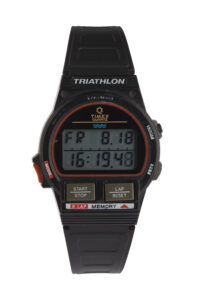
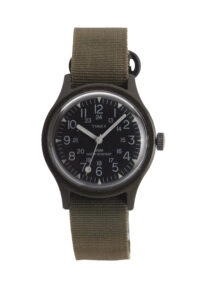
The Watch. The watch worn by Michael Emerson as Benjamin Linus in Lost is a Timex Easy Reader reference T200019J, an analog quartz watch featuring the brand’s proprietary Indiglo electroluminescent backlight technology, presenting a white dial on a stainless steel expansion bracelet with clean, generous Arabic numeral hour markers and a date display at three o’clock, water resistant to 30 meters. The piece appears in close-up during a flashback sequence in season three, episode twenty, where the camera lingers on the watch with a deliberateness that suggests the production regarded it as a meaningful piece of characterization rather than incidental wardrobe detail. The Timex Easy Reader occupies a specific and deliberate position in the American consumer landscape: a watch explicitly designed for legibility above all other considerations, its generous numeral scale and high-contrast white dial calibrated for instant readability without optical assistance, marketed at a price point accessible to the broadest possible demographic and retailed through mass-market channels including department stores, pharmacies, and big-box retailers. Indiglo, the electroluminescent backlight technology that Timex introduced across its product line in 1992, became one of the brand’s most recognizable differentiators, its distinctive blue-green glow illuminating the entire dial uniformly at the press of a button and becoming sufficiently embedded in popular culture to generate its own consumer recognition independent of the specific models that carried it. The choice of this particular watch for Benjamin Linus is one of the most precisely calibrated pieces of character design in the series’ production, and its logic becomes apparent only when considered against the character’s construction: Ben is a man of absolute control and deliberate presentation, whose every visible choice communicates something intended for a specific audience. A watch that retails for less than ten dollars at Walmart, worn by the island’s supreme manipulator whose organizational capabilities and institutional knowledge dwarf those of every character around him, communicates with surgical precision the nature of his relationship to status signaling: Ben does not signal status because he does not require external validation of the power he already possesses absolutely, and a Timex Easy Reader on a stainless expansion bracelet announces this indifference to the language of luxury with as much elegance as any Patek Philippe could announce the opposite.
Details
Brand:
Marketplace Price
€250
Movie Year:
2004
As seen on:
Movie/TV Series: