
The three James Bond films produced between 1997 and 2002 under Pierce Brosnan’s continuing tenure represent the commercial apex and creative nadir of his four-film run in the role, tracing an arc from confident franchise stewardship through progressive aesthetic and tonal dissolution that culminated in a film widely regarded as the low-water mark of the entire series. Tomorrow Never Dies, released on December 19, 1997, and directed by Roger Spottiswoode, is the most coherent and satisfying of the three: a brisk, professionally assembled thriller built around a media mogul villain — Elliot Carver, played by Jonathan Pryce — whose ambition to manufacture global conflict in order to generate exclusive news coverage was prescient enough in 1997 to have become more rather than less pointed with the passage of time. Michelle Yeoh’s Wai Lin, a Chinese intelligence operative who functions as Bond’s equal throughout the film’s second half, is among the most practically competent Bond women in the franchise’s history, her martial arts capability and professional self-sufficiency providing a genuine counterweight to Brosnan’s Bond rather than a romantic accessory to him. The World Is Not Enough, released on November 19, 1999, and directed by Michael Apted, opens with one of the most spectacular pre-title sequences in the series — a boat chase along the Thames from Bilbao to the Millennium Dome that remains a legitimate set piece achievement — before settling into a main narrative of considerable complexity and uneven execution, its villain construction divided between Robert Carlyle’s genuinely threatening Renard and Sophie Marceau’s Elektra King, whose eventual revelation as the film’s primary antagonist represents one of the more ambitious structural gambles in the franchise’s history, landing with partial but not complete success. Die Another Day, released on November 22, 2002, and directed by Lee Tamahori, marked the franchise’s fortieth anniversary with a film that squandered the goodwill generated by its predecessors through a combination of digital visual effects of startling inadequacy, a plot of surpassing implausibility even by Bond standards, and a tonal register of camp self-parody that seemed to have learned entirely the wrong lessons from the Moore era it was evidently attempting to invoke. Its commercial performance remained strong — the film grossed over 431 million dollars worldwide — but the critical and audience response was sufficiently damaging to precipitate the decision to reboot the franchise entirely with a new actor and a radically reconceived approach, a decision that produced Casino Royale in 2006.
Behind the Scenes. The production of Tomorrow Never Dies was shaped significantly by a scheduling conflict that altered its central casting: Michelle Yeoh was originally intended to feature in a reduced supporting capacity, but her availability and the production’s recognition of her screen presence expanded her role substantially during filming. Teri Hatcher’s Paris Carver, Bond’s former lover killed midway through the film, was written as a larger role that contracted during production due to scheduling constraints, a reduction that leaves the character’s emotional weight somewhat stranded in the finished film. The World Is Not Enough suffered the most consequential miscasting in the Brosnan era with Denise Richards as nuclear physicist Dr. Christmas Jones, a performance received by critics with a savagery that has not entirely abated in the quarter century since. Halle Berry’s Jinx in Die Another Day, introduced in a beach emergence sequence constructed as an explicit homage to Ursula Andress’s Honey Ryder in Dr. No, was sufficiently well received commercially to prompt serious development of a spin-off film that was ultimately abandoned following the franchise’s reboot decision. The invisible Aston Martin in Die Another Day — an Aston Martin Vanquish equipped with an adaptive camouflage system rendering it optically transparent — was received at the time of the film’s release as the gadget that most clearly illustrated the franchise’s disconnection from any plausible physical reality, and has not been reassessed more kindly since.
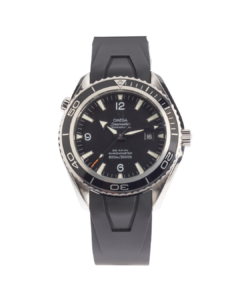
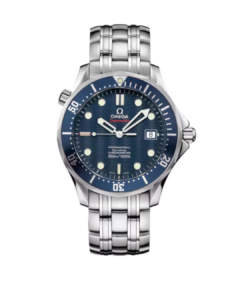
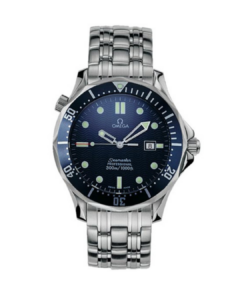
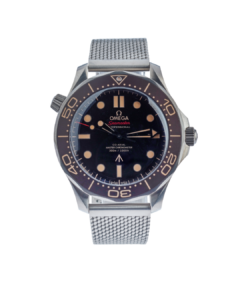
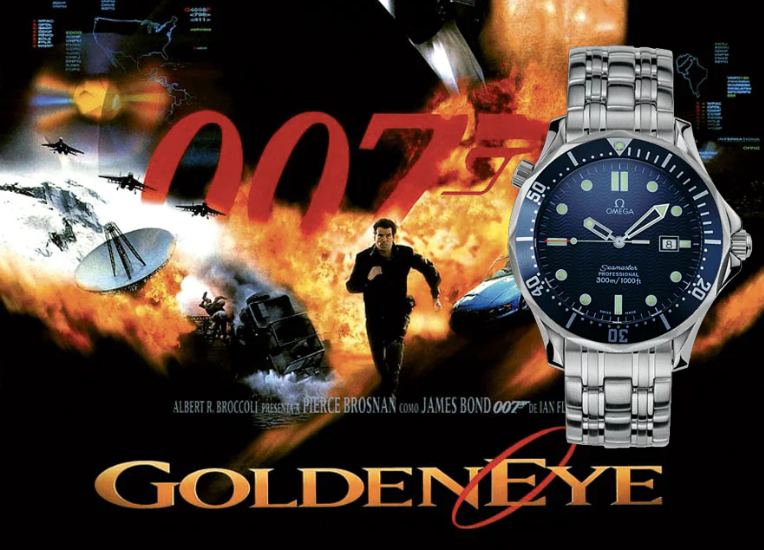
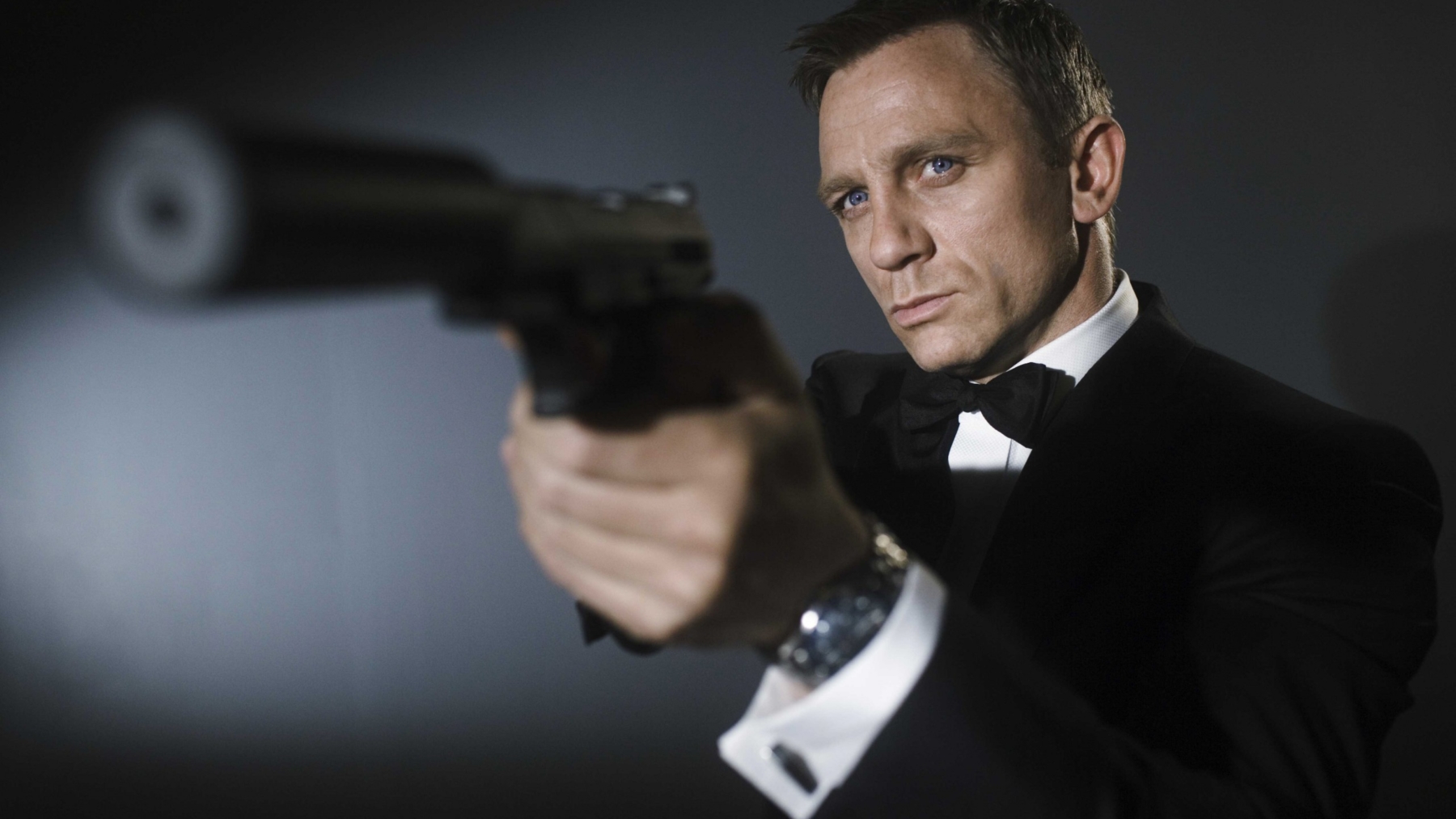
The Watch. The watch worn by Pierce Brosnan as James Bond across Tomorrow Never Dies, The World Is Not Enough, and Die Another Day is an Omega Seamaster Professional reference 2531.80, the automatic-movement successor to the quartz 2541.80 that had inaugurated the Bond-Omega partnership in GoldenEye and the piece that would define the visual identity of the Brosnan era’s wrist presence across its three remaining films. The transition from quartz to automatic between GoldenEye and Tomorrow Never Dies was not incidental: it reflected Omega’s conscious repositioning of the Seamaster Professional as a prestige mechanical instrument rather than a technologically advanced quartz product, a strategic shift consistent with the broader Swiss industry’s successful rehabilitation of mechanical watchmaking as a luxury value proposition through the 1990s following the near-terminal damage inflicted by the quartz crisis of the preceding two decades. The 2531.80 houses Omega’s caliber 1120, a self-winding movement based on the ETA 2892-A2 ebauche with Omega finishing and regulation, offering a level of mechanical performance entirely appropriate to the watch’s positioning as a professional diver’s instrument of genuine capability. The case shares the essential architecture of its predecessor — 41mm stainless steel, wave-pattern blue dial, unidirectional rotating bezel with ceramic insert, helium escape valve at nine o’clock — but the presence of the automatic movement gives the piece a additional case thickness that is perceptible in close-up and that projects a solidity consistent with the watch’s professional specification. The franchise’s deployment of the 2531.80 across three films gave Omega an uninterrupted decade of Bond association from 1995 through 2002, a period during which the Seamaster Professional became arguably the most recognizable watch in the world outside the Rolex Submariner — a transformation in brand visibility that the partnership’s architects had hoped for but whose completeness and speed exceeded most reasonable projections. Each of the three films integrated the watch into the narrative with varying degrees of gadget elaboration: Tomorrow Never Dies equipped it with a grappling hook and a detonator, The World Is Not Enough with a rappelling device, and Die Another Day with a grappling hook of revised specification and a detonator function that the film’s general atmosphere of excess prevented from registering with the impact of earlier deployments. The 2531.80’s production run overlapped with the Brosnan Bond films closely enough that the watch became inseparable in the public imagination from Brosnan’s specific physical inhabitation of the character — the blue dial against a dark suit cuff, the wave pattern catching light during action sequences — and its collector identity is consequently bound to that association in a way that makes clean, unpolished examples with original bracelet and box and papers among the most consistently sought references in the entire Bond watch lineage, their desirability compounded by the length of the association and the breadth of the audience that those three films collectively reached.
Details
Brand:
Marketplace Price
€2 500
Movie Year:
1997
As seen on:
Movie/TV Series: