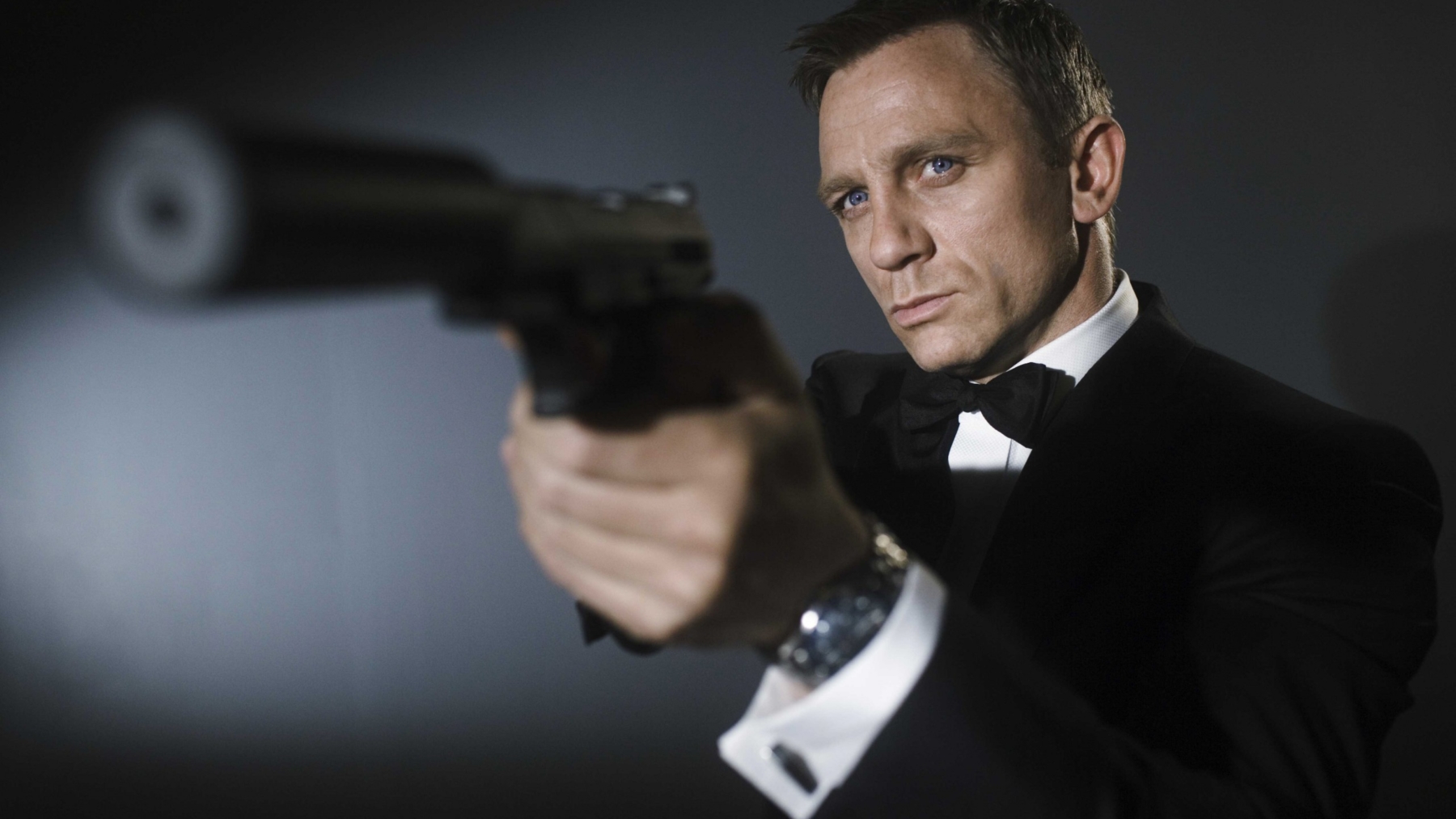

Released on November 16, 2006, and directed by Martin Campbell for Eon Productions and Sony Pictures, Casino Royale is the twenty-first entry in the official James Bond series and the first to star Daniel Craig in the title role. It represents the most radical reinvention the franchise had attempted since its inception: a hard reboot that discarded the accumulated continuity of the preceding forty years, returned to Ian Fleming’s first Bond novel published in 1953, and reconstructed the character from foundational principles with a seriousness of dramatic intent that the series had not consistently pursued since the early Connery films. The decision to cast Craig — blond, physically stocky, and possessed of an acting range and intensity that the role had rarely demanded — was received with vociferous public skepticism in the period between announcement and release, generating a volume of online protest that now reads as one of the more instructive case studies in the gap between audience anticipation and audience response. The film that emerged from Campbell’s direction and the screenplay by Neal Purvis, Robert Wade, and Paul Haggis is among the finest in the entire series: a taut, emotionally grounded thriller that follows Bond through his earning of 00 status into a high-stakes poker game in Montenegro against the banker to the world’s terrorist organizations, Le Chiffre, played by Mads Mikkelsen with a cold, exhausted menace entirely unlike the megalomaniacal villain template the franchise had relied upon for decades. Eva Green’s Vesper Lynd is the most fully realized Bond woman in the series’ history — intelligent, damaged, morally compromised, and genuinely consequential to the narrative’s emotional resolution in a way that no previous Bond woman had been permitted to be — and her relationship with Craig’s Bond carries a weight of mutual vulnerability that the franchise had previously treated as incompatible with the character’s essential invulnerability. The film grossed over 594 million dollars worldwide, vindicated every casting decision that had been publicly questioned, and set a standard of dramatic ambition for its successors that the subsequent Craig films pursued with varying success.
Behind the Scenes. Martin Campbell’s return to the franchise — he had previously directed GoldenEye, making him the only director to have introduced two different Bond actors — brought a technical assurance to the action sequences that the script’s more intimate dramatic demands required as counterbalance. The pre-title sequence, shot in black and white and depicting Bond’s achievement of 00 status through two kills presented with a stark, procedural economy, established the film’s tonal register with complete clarity in its opening minutes and has been widely studied as a model of franchise reintroduction. The poker game at the heart of the film replaced the baccarat of Fleming’s novel for the practical reason that poker’s rules and tensions are more immediately legible to a contemporary international audience than baccarat’s, a substitution that the film justifies through the quality of the table sequences, directed with a patience and attention to psychological detail unusual in action cinema. Judi Dench’s continuation as M — retained from the Brosnan era despite the reboot’s otherwise total continuity reset, an anomaly the film neither explains nor dwells upon — provided the Craig Bond with an institutional relationship of genuine dramatic complexity, the dynamic between them carrying a weight of mutual professional respect and personal mistrust that developed across Craig’s subsequent films into one of the more interesting relationships the franchise had produced. The decision to shoot the film’s climactic sequence in Venice, with Bond and Vesper in a palazzo whose foundations give way beneath them, gave the film an ending of genuine visual and emotional ambition that its more conventional action predecessors had rarely attempted.
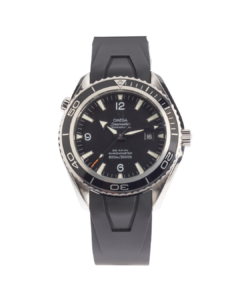
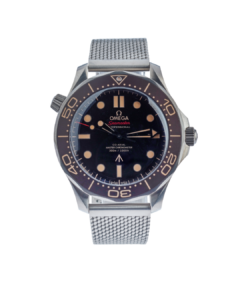
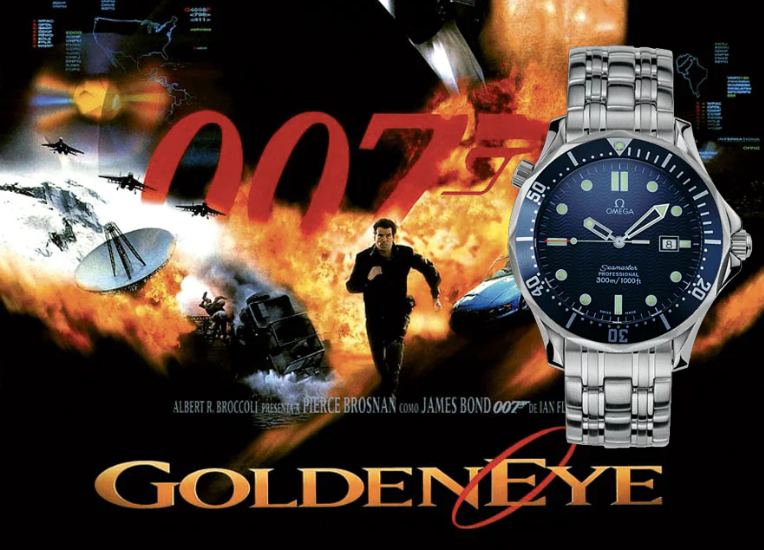
The Watch. The watch worn by Daniel Craig as James Bond in Casino Royale is an Omega Seamaster Planet Ocean reference 222.80, a piece that represents a deliberate and significant departure from the Seamaster Professional that had defined the Bond wrist through the entire Brosnan era and that signals, in its choice, the same ambition to reset expectations that the film itself embodies. The Planet Ocean, introduced by Omega in 2005 as a larger, more tool-watch-oriented addition to the Seamaster family, occupies a different position within the collection from the wave-dial Professional that preceded it on Bond’s wrist: where the Professional’s aesthetic had been refined and dressy enough to carry through formal sequences without incongruity, the Planet Ocean is an unambiguous professional diving instrument, its 42mm case, broad bezel, and boldly scaled dial projecting a functional seriousness entirely consistent with the stripped-back, physically credible Bond that Craig was being asked to construct. The reference 222.80 specifically — in stainless steel with a black dial and black ceramic bezel insert — houses Omega’s caliber 2500, a co-axial escapement movement representing the Swiss manufacturer’s most significant proprietary technical contribution to watchmaking of the preceding decade, the co-axial mechanism reducing friction between escapement components in a manner that its inventor George Daniels had developed independently and that Omega had acquired the rights to produce commercially in 1999. The co-axial’s presence in the Bond watch was not incidental to Omega’s marketing of the association: it allowed the brand to position the franchise relationship not merely as a celebrity endorsement but as a demonstration of genuine technical achievement, a watch good enough for the world’s most demanding fictional operative and distinguished from its competitors by a mechanical innovation of legitimate horological significance. The film’s deployment of the Planet Ocean is notably restrained by the franchise’s established gadget conventions — it functions throughout Casino Royale as a watch rather than a device, worn through action sequences, card games, and the film’s devastating emotional final act without being called upon to detonate, project, or rappel — a restraint consistent with the film’s broader ambition to present a Bond whose credibility depends on the plausibility of his equipment. Among collectors, the specific reference worn by Craig in Casino Royale holds a position of considerable importance within the Bond watch lineage as the piece that marked the transition from the Seamaster Professional’s decade-long franchise dominance to the Planet Ocean era, its black dial and ceramic bezel now inseparable from Craig’s specific physical presence in a film that redefined what a Bond film could be.
Details
Brand:
Marketplace Price
€2 600
Movie Year:
2006
As seen on:
Movie/TV Series: