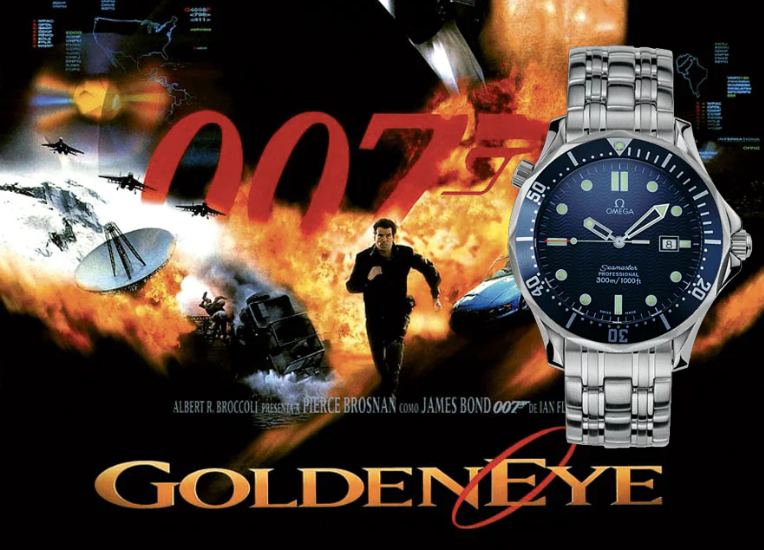

Released on November 13, 1995, and directed by Martin Campbell for Eon Productions and MGM/UA, GoldenEye is the seventeenth entry in the official James Bond series and the first to star Pierce Brosnan in the title role. It arrived after a six-year hiatus — the longest in the franchise’s history to that point — imposed by a protracted legal and financial dispute between Eon Productions and MGM that had left the series in a state of suspended animation while the action cinema landscape it had helped create evolved dramatically around it. The film’s central premise deploys a Soviet-era electromagnetic pulse weapon called GoldenEye, capable of destroying electronic infrastructure across an entire city from orbital altitude, as the MacGuffin around which Bond’s pursuit of a renegade former MI6 agent — Alec Trevelyan, played by Sean Bean, established in the pre-title sequence as Bond’s closest colleague and revealed in the main narrative as his most dangerous adversary — is organized. Campbell’s direction is confident and kinetic, re-establishing the franchise’s action credentials with a pre-title sequence set on a Soviet chemical weapons facility that delivers one of the series’ most purely satisfying openings, and sustaining a pace and tonal clarity through the main narrative that the Brosnan films would find increasingly difficult to maintain as the series progressed. Judi Dench’s debut as M — the first woman to occupy the role, and the first major recasting of a recurring character in the franchise’s history — provided the film with one of its most discussed scenes, a briefing in which M delivers a pointed assessment of Bond as a relic of the Cold War whose instincts and attitudes belong to a world that no longer exists, a piece of institutional self-examination that the franchise had never previously attempted with such directness.
Behind the Scenes. Pierce Brosnan’s path to the role was one of the more protracted and complicated in the franchise’s casting history. He had been offered the part in 1986 following Roger Moore’s retirement, only to be prevented from accepting by contractual obligations to the television series Remington Steele, whose American network promptly renewed the show upon learning of the Bond offer, trapping Brosnan in a commitment he could not honorably exit. Timothy Dalton filled the role for two films — The Living Daylights in 1987 and Licence to Kill in 1989 — before the legal dispute halted production entirely, and Brosnan’s eventual casting in 1994 represented the resolution of a thread that had been suspended for nearly a decade. The screenplay, written by Jeffrey Caine and Bruce Feirstein from a story by Michael France, was the first in the series not to draw on any Fleming source material beyond the title, which itself derived from the name of Fleming’s Jamaican estate rather than from any specific story. The casting of Sean Bean as Trevelyan produced one of the more genuinely menacing Bond antagonists of the post-Cold War era, Bean’s physical and temperamental similarity to Brosnan lending the adversarial relationship a credibility that the film exploits with considerable intelligence. Famke Janssen’s Xenia Onatopp, whose lethal predilections were received by contemporary critics with a mixture of amusement and discomfort, has since been reassessed as one of the franchise’s more self-consciously absurdist villain constructions, operating in a register of deliberate excess that the film itself appears to find entertaining rather than troubling.
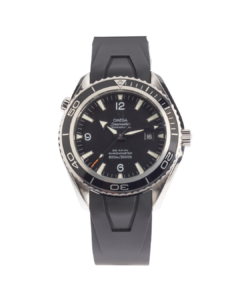
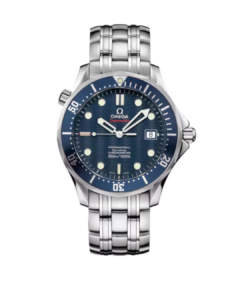
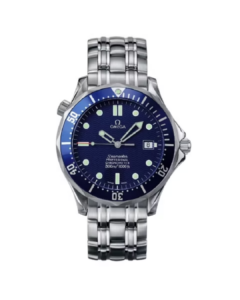
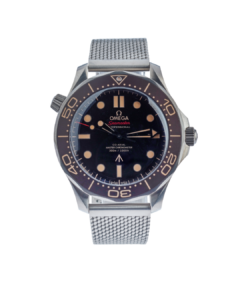
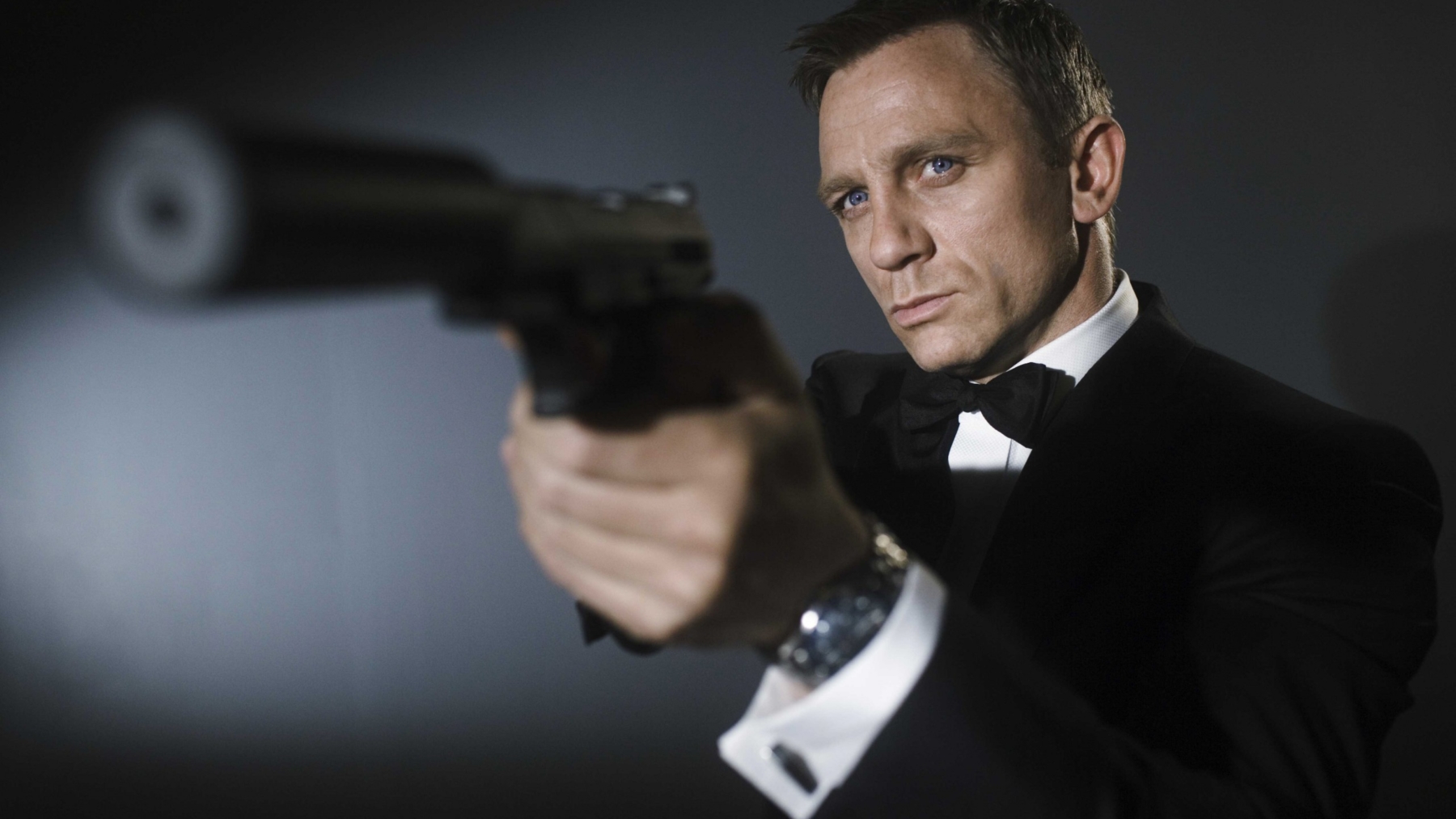
The Watch. The watch worn by Pierce Brosnan as James Bond in GoldenEye is an Omega Seamaster Professional reference 2541.80, a quartz-movement diver’s watch from the Swiss manufacturer’s 1994 Seamaster Professional collection that marks one of the most consequential product placement arrangements in the history of the watch industry. The decision to move Bond’s wrist from Seiko — where it had resided through the Moore era — to Omega represented a strategic realignment of considerable mutual ambition: Omega, a marque of genuine historical prestige that had nonetheless spent much of the 1980s in a commercially difficult position relative to Rolex and the ascending wave of new Swiss luxury brands, required the kind of cultural repositioning that a Bond association could deliver with an immediacy that conventional advertising could not replicate, while Eon Productions required a watch partner whose brand equity was consistent with the franchise’s aspirational positioning and whose financial commitment to the partnership would underwrite a meaningful portion of the film’s marketing expenditure. The reference 2541.80 is a handsome piece: the Seamaster Professional collection of this generation features a 41mm stainless steel case, a wave-patterned blue or black dial depending on variant — the Bond piece presenting the distinctive blue — a unidirectional rotating ceramic-insert bezel, and the helium escape valve at nine o’clock that had been a Seamaster Professional hallmark since the collection’s earlier iterations. The quartz caliber inside the specific reference worn by Brosnan in GoldenEye would give way to automatic movements in subsequent Bond Seamasters, a transition that reflected both collector preference and Omega’s desire to foreground its mechanical manufacture credentials as the brand’s repositioning gathered momentum through the late 1990s. The film integrates the watch into a gadget sequence with the confident directness of a partnership that understood the commercial value of the moment: the 2541.80 is equipped, in the film’s fiction, with a laser cutter and a grappling hook mechanism, functional absurdities delivered with enough conviction to serve as the film’s most memorable product demonstration. The Omega-Bond relationship initiated by GoldenEye has proved the most durable and commercially sophisticated watch partnership in cinema history, continuing without interruption through six Bond actors across nearly three decades, generating a dedicated collecting sub-culture around each successive reference, and fundamentally reshaping the secondary market value of every Seamaster variant associated with the franchise. The 2541.80 occupies a foundational position within this lineage — the watch that began the association, worn in the film that saved the franchise — and its collector desirability reflects both its intrinsic quality and the historical weight of the moment it represents, examples in unworn condition with original bracelet and documentation now commanding premiums that would have seemed improbable in 1995 for a quartz-movement diver’s watch retailing at mid-luxury price points in Omega boutiques worldwide.
Details
Brand:
Marketplace Price
€1 800
Movie Year:
1995
As seen on:
Movie/TV Series: