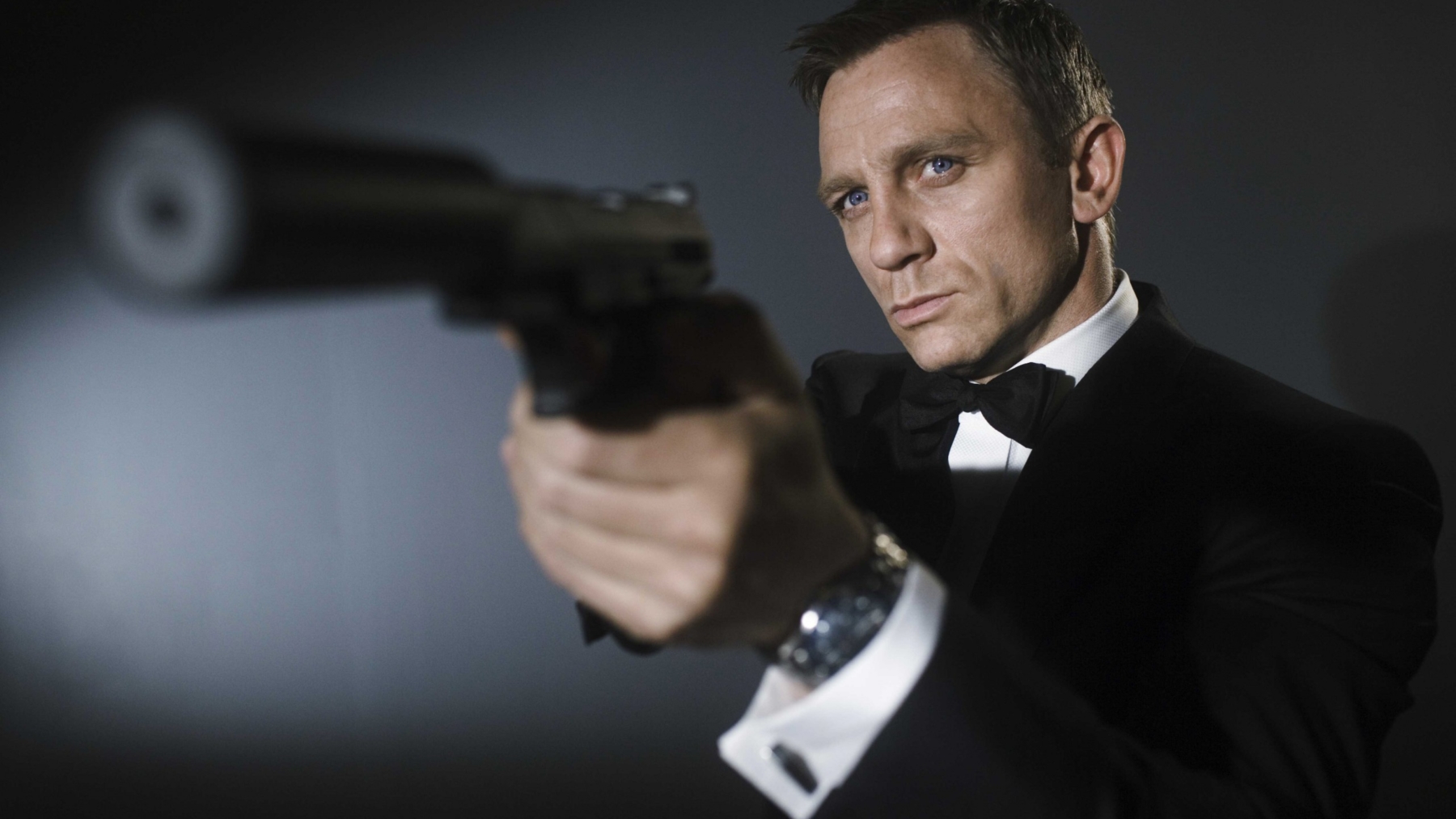
Directed by Cary Joji Fukunaga and produced by Barbara Broccoli and Michael G. Wilson, No Time to Die is the twenty-fifth entry in the James Bond franchise and the fifth and final film to star Daniel Craig as 007. The story picks up with Bond having left MI6 and settled into a quiet life in Jamaica, before he is drawn back into service to rescue a kidnapped scientist, uncovering a plot involving a genetically targeted bioweapon controlled by the enigmatic Safin, played by Rami Malek. The film ends with Bond’s death — the first time in the franchise’s history that 007 is conclusively killed — making it both a finale and a eulogy for the entire Craig era. It grossed over $774 million worldwide and stands as one of the most emotionally resonant entries in the series.
Behind the Scenes. The road to release was extraordinarily turbulent. The film was originally to be directed by Danny Boyle, who departed due to creative differences — reportedly over his insistence on killing Bond — and Fukunaga became the first American filmmaker in the franchise’s history to direct a Bond film. The script was continuously rewritten, with Phoebe Waller-Bridge brought in mid-production to sharpen the dialogue, while Daniel Craig injured his ankle during filming in Jamaica following a reported argument with Fukunaga, delaying the entire London shoot. The film was then scheduled for release in April 2020, only to become the first major production to delay its release due to COVID-19 — not once, but multiple times — ultimately arriving in cinemas in the autumn of 2021, a full five years after Spectre. During that chaotic stretch, some of the film’s sponsor brands demanded reshoots because products Bond used on screen had become commercially obsolete during the delays. Ana de Armas, cast as the exuberant CIA operative Paloma, had only three weeks of training for her action sequences and mentioned it so often to Fukunaga that he told her to say it in the film — and so her line about having trained for three weeks was kept in the final cut. In one of the production’s stranger behind-the-scenes moments, Fukunaga directed several scenes featuring Ralph Fiennes without either of them fully understanding where or why those scenes fit in the story, only realizing how it all connected once the film was assembled in the editing room.
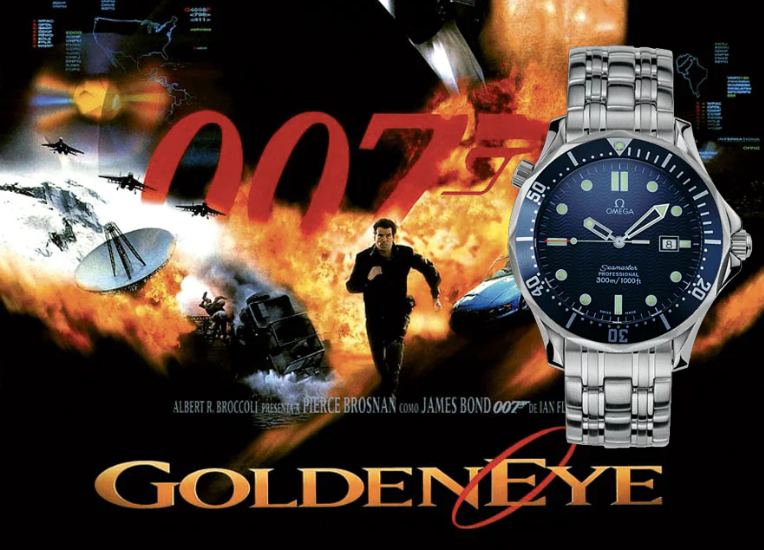
The Watch. The Omega Seamaster Diver 300M 007 Edition worn by Daniel Craig in No Time to Die is, arguably, the most personal and carefully considered watch in the entire Bond–Omega partnership that began with GoldenEye in 1995. Unlike previous Bond Omegas, this watch was shaped directly by Craig himself, who — after nearly two decades playing 007 — had developed strong opinions about what the character should wear. Craig wanted something that felt like a genuine military-issue tool watch, closer in spirit to what Ian Fleming, a former naval intelligence officer, would have envisioned. The result is the reference 210.90.42.20.01.001, a 42mm case crafted entirely from Grade 2 titanium, making it exceptionally light on the wrist. The dial departs entirely from the classic Seamaster formula, abandoning the signature blue wave pattern in favour of a warm, sandy brown with vintage-tinted SuperLumiNova applied to the hands, indices, and — unusually — the entire aluminium bezel insert, which glows in full at night. There is no date window, reinforcing the clean, military aesthetic. The caseback is engraved with a series of authentic-format British military reference codes: “0552” for naval personnel issue, “923 7697” for a diver’s watch, the letter “A” for a screw-in crown, “007” for Bond’s agent number, and “62” for the year of the very first Bond film — all kept in perfect alignment by Omega’s Naiad Lock system. Inside beats the METAS-certified automatic Calibre 8806, offering 55 hours of power reserve. In the film, Q equips the watch with a miniaturised EMP device capable of short-circuiting electronics at close range — a gadget that Bond uses to lethal effect against the bionic-eyed henchman Primo. The watch was released as a non-limited edition, a deliberate choice by Omega after the frenzy that surrounded the limited Spectre edition. It has since become one of the brand’s most enduring and recognizable references, continuing to sell strongly years after the film’s release.