The Casio G-Shock DW-6900-1V: the Triple Graph digital diver that John Woo strapped to Tom Cruise’s wrist and turned into a countdown device for the end of the world
John Woo’s Mission: Impossible II (2000) is a film of controlled excess: slow-motion doves, motorbike jousting, hair that never submits to physics, and an action grammar borrowed almost entirely from Woo’s Hong Kong peak. Ethan Hunt, played by Tom Cruise at the height of his commercial reach, is tasked with recovering a genetically engineered supervirus called Chimera before it is released on Sydney. The watch on his wrist throughout, and in close-up during the scene where he measures the countdown to Chimera’s activation, is a Casio G-Shock DW-6900-1V. The prop department altered the display, adding a fictional “Transponder Tracking Device” readout that the actual watch cannot generate, but the case, the three circular subdials, and the matte black resin body are unmistakably those of one of Casio’s best-selling G-Shocks of the 1990s.
It was not the first time Cruise had worn a Casio for the franchise. In the original Mission: Impossible (1996) Ethan Hunt had carried a DW290-1V, and in the third film he would wear a G-Shock MTG-910DJ. The franchise’s consistent choice of Casio over the luxury Swiss brands that typically populate action cinema is one of those quiet, accumulative decisions that says something real about the character: Hunt is a professional, not a connoisseur. His equipment is chosen for what it does.
G-Shock: The Watch That Would Not Break
The G-Shock line was born in 1983 from a specific engineering brief given to Casio engineer Kikuo Ibe: design a watch that could survive a ten-metre drop onto concrete. Ibe spent two years on the problem, eventually developing a hollow structure in which the movement floated inside the case, isolated from impact by a suspended mounting system and protected by a thick resin shell. The resulting DW-5000C, released in April 1983, passed its own drop test and established the G-Shock vocabulary of chunky case, integrated strap, and uncompromising shock resistance. The line became a genuine phenomenon, adopted by military units, construction workers, extreme athletes, and, through the particular alchemy of 1990s street culture, by hip-hop artists, skateboarders, and eventually by anyone who wanted a watch that communicated toughness without effort.
The DW-6900 arrived in February 1995 as a significant design departure from the squared DW-5000 and DW-5600 family. Where those models had rectangular cases derived from the original G-Shock concept, the 6900 built its geometry around a circle, Casio’s designers reasoning that a perfect circle maximises surface area for a given perimeter and distributes impact forces more efficiently around the case perimeter. Every design element of the DW-6900 follows this logic: the case is round, the bezel ring is concentric, the button guards curve outward symmetrically, and even the three subdials on the face are circular, a layout the collector community called, with the nickname’s mixture of affection and menace, the Triple Graph, or sometimes the Triple Eyed Devil.
The Triple Graph: Three Eyes, One Face
The DW-6900’s most distinctive visual feature is also its most debated. The three circular graphic displays above the main LCD dominate the dial’s upper half and give the watch its alien, multi-eyed silhouette. They function as a segmented seconds counter: the left and middle eyes count seconds in five-segment increments, with the right eye accumulating tens of seconds until a full minute resets the system. It is, in the most literal sense, a display system for the passage of time expressed as a visual countdown, which is presumably why the Mission: Impossible II prop team chose the DW-6900 rather than any other G-Shock when they needed a watch whose face could credibly host a ticking timer. The three eyes read, in the dark of a cinema screen, as exactly the kind of thing that might be counting down toward something catastrophic.
The main LCD displays time, date, and mode information with the legibility that all G-Shocks prioritise above aesthetics. The 1/100-second stopwatch measures elapsed, split, and first-second place timing. The countdown timer runs to 24 hours in one-second increments. A single multi-function alarm and an hourly time signal complete the list. The front-mounted electroluminescent backlight button at six o’clock, a feature introduced on the DW-6600 in 1994 and carried forward into the 6900, illuminates the entire dial in a blue-green glow rather than the dim corner LED of earlier digital Casios, a technological improvement that was, in 1995, genuinely significant. The EL backlight is the same basic technology as Timex’s INDIGLO, and its introduction on the 6900 was part of Casio’s broader investment in display visibility as a primary specification rather than an afterthought.
The Case: Hard Resin and the Logic of Protection
The DW-6900-1V case is hard black resin, measuring approximately 53mm in length, 50mm in width, and 18.7mm in thickness, dimensions that were considered oversized when the watch debuted in 1995 and that register today as medium-large within the G-Shock family’s own expanded range. The strap is integrated into the case in the G-Shock manner, the body and band read as a single object rather than a case with accessories attached, and the button guards project from both flanks of the case, protecting the side pushers from lateral impact. Water resistance is rated to 200 metres, well beyond what the DW-6900 is likely to encounter in even serious recreational diving, but the specification is consistent with G-Shock’s general policy of over-engineering against its stated parameters.
The watch operates on a CR2016 battery with an approximate two-year life, has an auto-calendar accurate to 2099, and weighs 67 grams. It retails in its base 1V configuration, all black with minimal colour accent, for around fifty dollars at most outlets, a price that has remained essentially stable for decades and that represents one of the more extraordinary value propositions in consumer timekeeping: a watch that has appeared on the wrist of one of the highest-paid actors in Hollywood history, adopted by US military personnel, covered in hip-hop memorabilia, and worn by Kanye West, Pharrell Williams, Ed Sheeran, and Chris Martin, available for the price of a restaurant dinner.
The Prop and the Product
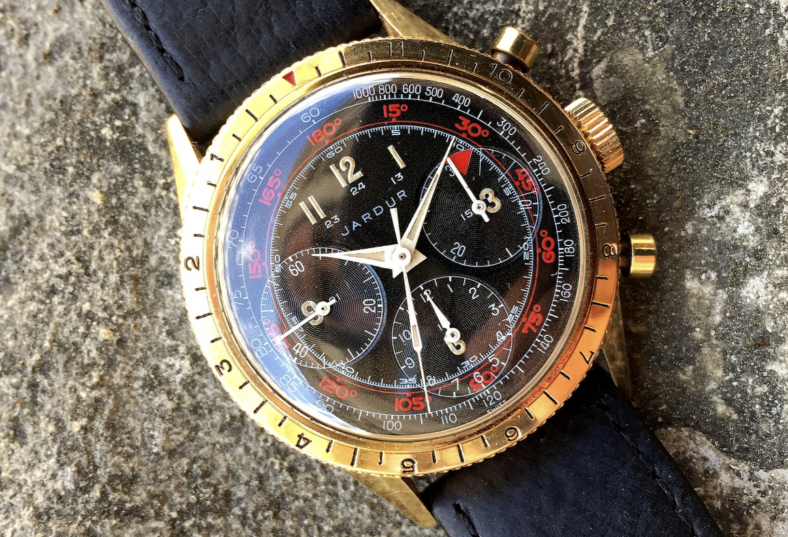
The DW-6900 worn in Mission: Impossible II is technically a modified prop: the digital display was altered, presumably by digital means in post-production, to show the countdown readout that the actual watch cannot generate. But the hardware is real, and its choice was deliberate. Ethan Hunt wearing a fifty-dollar Casio while saving the world from a man-made plague is a casting decision, in the same sense that the Jardur on De Niro’s wrist in Ronin or the Seiko 6105 on Martin Sheen’s in Apocalypse Now are casting decisions. The watch says something about the person. Hunt does not perform; he executes. His watch is a tool for measuring time under pressure, and the DW-6900, which was designed for exactly that purpose and has been doing it reliably since 1995, is the right instrument.
In 2025 Casio released three limited 30th anniversary editions of the DW-6900, in the original colorways of the first multi-color model, the DW-6900H, the backs engraved with “SHOCK RESIST” and a ring of thirty stars. The LCD illuminates with the text “SINCE 1995.” Thirty years of the Triple Eyed Devil, still for fifty dollars, still unbreakable.
Technical note: Casio G-Shock DW-6900-1V, introduced February 1995. Hard resin case, 53.2mm length, 50mm width, 18.7mm thickness, weight 67g. Triple Graph Display with three circular LCD subdials functioning as segmented seconds counter. Main LCD: time (12/24h), auto-calendar to 2099, day, date, month. Casio module 3230. Functions: 1/100-second stopwatch (elapsed, split, 1st-2nd place), 24-hour countdown timer, multi-function alarm, hourly time signal, flash alert. Electroluminescent backlight via front button at 6 o’clock. Shock resistance, 200m water resistance. CR2016 battery, approximately 2-year life. Available in multiple colorways, base 1V model: all black.
Details
Brand:
Marketplace Price
€250
Movie Year:
2000
As seen on:
Movie/TV Series: