
CHiPs is an American action drama series that aired on NBC from September 15, 1977 to July 17, 1983, across six seasons and 139 episodes. Created by Rick Rosner, the show follows two motorcycle officers of the California Highway Patrol — the veteran Frank “Ponch” Poncherello, played by Erik Estrada, and the rookie Jon Baker, played by Larry Wilcox — as they patrol the freeways of Los Angeles, responding to accidents, pursuing criminals, and navigating the quotidian bureaucracy of law enforcement with a lightness of touch that kept the series firmly on the optimistic end of the late-1970s television spectrum. Where much of the crime drama of its era drew on the grittier urban realism that had entered American popular culture in the wake of Dirty Harry and The French Connection, CHiPs operated in a register of sun-drenched, largely consequence-free action that made it enormously accessible to family audiences and, in particular, to the younger demographic that made Erik Estrada one of the defining pin-up presences of the late 1970s and early 1980s. At its peak the show drew audiences of over twenty million, and its image of California highway life — all gleaming motorcycles, reflective aviator sunglasses, and perpetual sunshine — became part of the visual grammar through which international audiences understood Southern California during the period. The series was revived as a theatrical feature film in 2017, written and directed by Dax Shepard, which took a considerably more irreverent approach to the source material.
Behind the Scenes. The relationship between Erik Estrada and Larry Wilcox was, by multiple accounts, one of the more comprehensively dysfunctional partnerships in American television history, deteriorating from professional friction into what both men have described in interviews as genuine mutual antipathy. Wilcox departed the series after the fifth season, replaced by Tom Reilly as Officer Bobby Nelson, and has been candid in subsequent years about his dissatisfaction with both the working environment and what he perceived as the production’s prioritization of Estrada’s star persona over the show’s ensemble dynamics. Estrada, for his part, was absent from several second-season episodes following a genuine motorcycle accident sustained during filming that required hospitalization and recovery, his scenes covered by a stunt double and his absence written around with a flexibility that testified to the production’s logistical ingenuity. The Honda CX500 motorcycles used in the show, provided and maintained by the California Highway Patrol in a product placement arrangement of considerable mutual benefit, became objects of significant public fascination and drove measurable commercial interest in motorcycle ownership among the show’s younger viewers. The casting of Estrada, a New York-born actor of Puerto Rican descent, in a leading role on a major network primetime series at a moment when Latino representation in American television was negligible, carried a cultural weight that the show itself rarely acknowledged directly but that its audience understood implicitly.
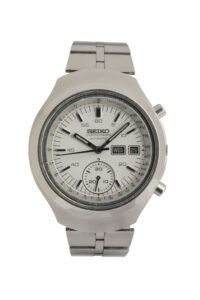
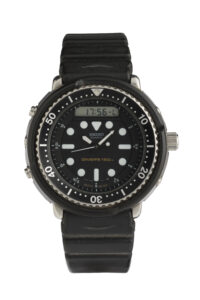
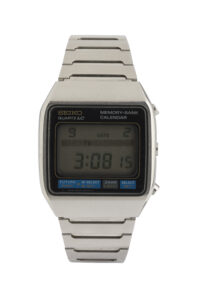
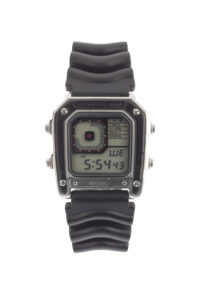
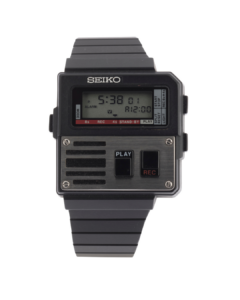
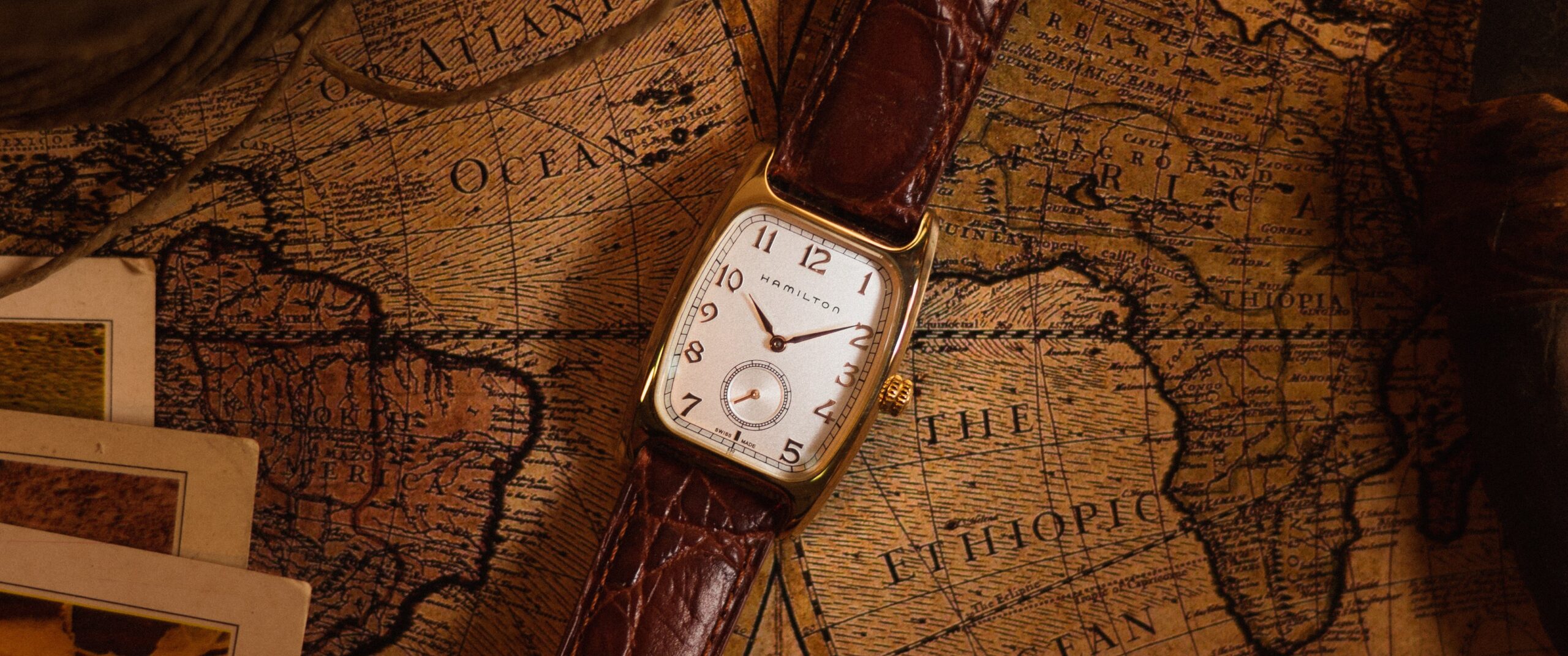
The Watch. The watch worn by Erik Estrada as Frank Poncherello throughout CHiPs is a Seiko reference 6309, a Japanese automatic diver’s watch that represents one of the most successful and enduring entries in Seiko’s long history of producing professional-grade tool watches for the mass market. The 6309 was introduced in 1976 and produced through the mid-1980s in several variants, all sharing the same tonneau-shaped stainless steel case with its distinctive asymmetric crown and pushers protected by integrated case guards, a unidirectional rotating bezel, and a movement — the caliber 6309 automatic — of proven reliability and straightforward serviceability. Seiko’s position in the dive watch market during the 1970s was one of the more remarkable commercial stories in the watch industry of the period: a Japanese manufacturer producing tool watches of genuine professional specification at prices that undercut Swiss competition by a factor that the Swiss industry initially dismissed as unsustainable and subsequently recognized, too late for comfortable adjustment, as a structural realignment of the entire market. The 6309 was available in American retail channels — department stores, sporting goods retailers, military post exchanges — at a price point accessible to a working patrolman, which is precisely the verisimilitude it brings to Poncherello’s wrist. Its appearance on Estrada’s arm throughout the series is consistent with the character’s construction as a working-class Los Angeles law enforcement officer of modest means and unpretentious taste — a man who needs a watch that can be worn through a pursuit, a crash, and a subsequent shift without complaint, and who is not consulting it as a statement of anything beyond the time. The 6309 became, across its production run, one of the most widely distributed Japanese dive watches in the American market, and its ubiquity means that screen-accurate examples are not difficult to source — a relative accessibility that has kept entry prices for collectors reasonable even as the model’s reputation has grown substantially within the vintage Japanese watch community, where Seiko’s 1970s dive watch production is now regarded with an enthusiasm and scholarly seriousness that would have seemed improbable when the watches were retailing at mall jewelry counters across suburban America.
Details
Brand:
Marketplace Price
€400
Movie Year:
1977
As seen on:
Movie/TV Series: